Newspaper Advertising in India in 2026
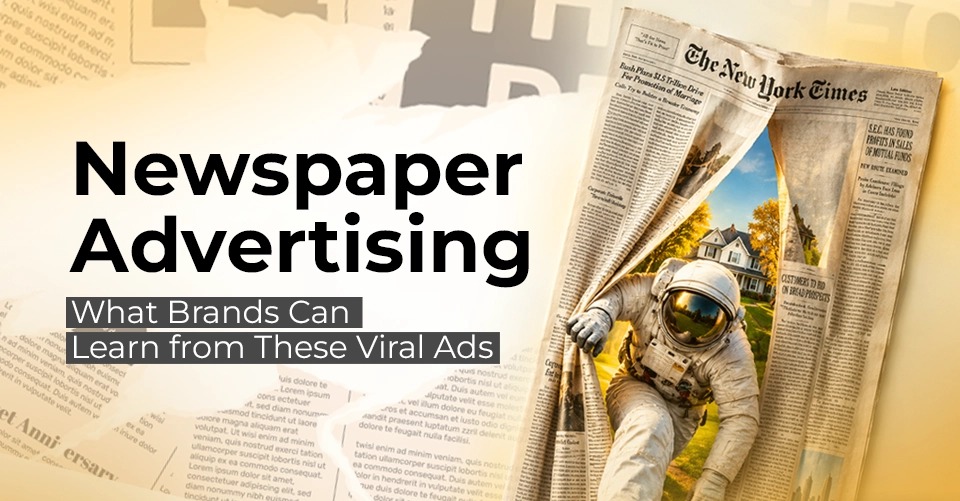
Newspaper Advertising in India: Viral Ads, Creative Print Ideas and What Brands Can Learn From Them
When Instagram Reels, influencers and AI-generated content dominate our world, it's easy to assume print has lost its place. But a newspaper landing at your doorstep can still make you stop and look.
A full-page advertisement can make a reader pause over breakfast. A catchy headline can become a screenshot on LinkedIn. A front-page takeover can turn into a social media conversation within hours. And 2026 has given us plenty of proof.
From Zomato turning a newspaper front page into a guessing game to BMW writing what looked like a personal letter, newspaper advertising in India is no longer simply about buying space and filling it with information.
So, what makes newspaper advertising relevant in 2026? Why are brands still investing in it? And what can businesses learn from some of the most talked-about newspaper advertisements of the year?
What Is Newspaper Advertising?
Newspaper advertising is the practice of promoting a product, service, brand, offer or message through a newspaper. It can take many forms, including:
- Classified advertisements
- Display advertisements
- Half-page and full-page advertisements
- Front-page advertisements
- Jacket or cover advertisements
- Festival and occasion-based campaigns
- Corporate and brand-image campaigns
But newspaper advertising in 2026 looks very different from the traditional "headline + product image + offer + phone number" format.
Today, the newspaper itself can become part of the creative idea. The page can be redesigned and a physical element can be added to the page.
When Newspaper Ads Became Social Media Content
One of the biggest changes in newspaper advertising is happening outside the newspaper. A creative appears in print in the morning. Someone photographs it and it is posted on different social media platforms. Then marketing pages analyse it.
Suddenly, a single newspaper placement has become a piece of internet content. Several 2026 campaigns demonstrated exactly this behaviour.
Zomato's Red Front Page That Made Everyone Guess
To celebrate its 18th birthday, Zomato ran a full-page advertisement in The Times of India. The page was almost entirely red and carried a simple birthday message, while deliberately leaving out the logo and brand name. Then came the interesting part. People started guessing the brand.
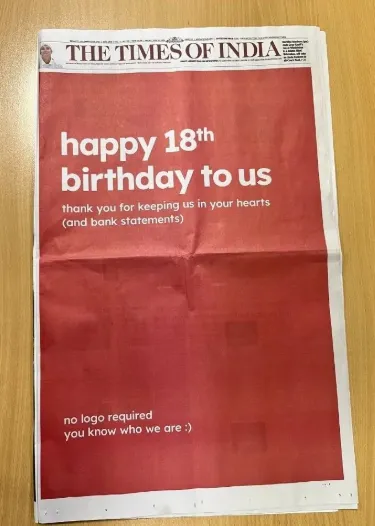
Was it Airtel? Coco-Cola? H&M? Another red brand?
Eventually, the clues pointed towards Zomato. The campaign demonstrated the power and risk of distinctive brand identity. Zomato was effectively asking whether people could recognise it without seeing its logo.
The campaign worked because it created a question. "Who is this?" That question gave the advertisement a life beyond the newspaper.
BMW Turned a Newspaper Ad Into a Personal Letter
BMW India took a completely different approach earlier in 2026. Its front-page advertisement in The Times of India was designed like a personal letter from one lover to another. Instead of immediately showing off a car, the copy described the qualities of an ideal companion.
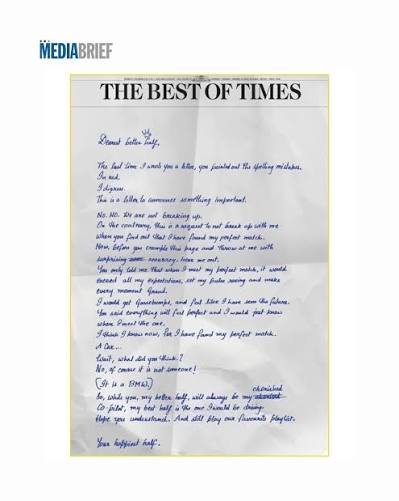
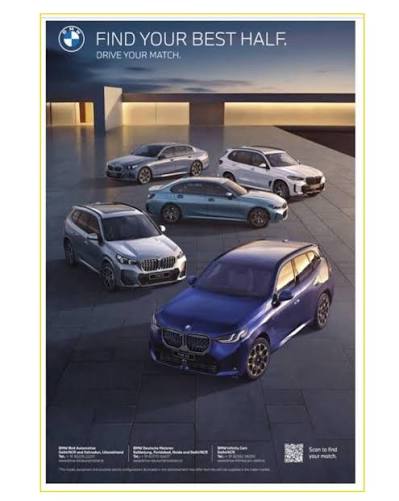
Only later did the reader realise that the "perfect match" being described was a BMW. The newspaper masthead was also creatively replaced with "The Best of Times."
The ad was subtle. It didn't scream "BUY THIS CAR." Instead, it created a story and allowed the product reveal to arrive later.
Mother Dairy Put a Mirror in the Newspaper
Mother Dairy ran an interactive front-page newspaper ad with a real embedded peelable mirror to promote its Go-Low Ice Cream campaign. The idea connected the physical experience of looking into a mirror with the campaign's "guilt-free indulgence" positioning.
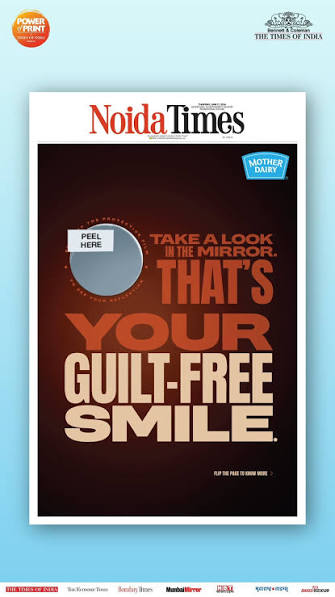
The campaign reportedly generated more than 1.5 million Instagram video views and over 20,000 interactions. This is a fascinating example of where print advertising is heading.
Horlicks Pull-Out Cup
Horlicks turned a four-page newspaper pull-out into something readers could actually twist and unfold. Instead of simply showing the product and listing its ingredients, the advertisement included a "Twist Here" mechanism. As readers rotated the circular section, the flat newspaper structure expanded into a 3D, stretchable and collapsible cup.
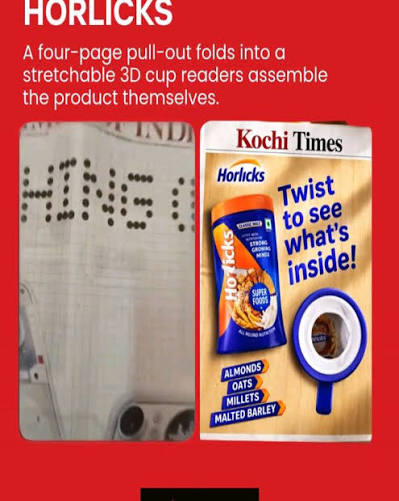
The interaction also revealed the ingredients behind Horlicks' "Super Foods" proposition, including almonds, oats, millets and malted barley.
They did not just talk about the product experience. The newspaper itself became part of the demonstration.
Not Every Viral Newspaper Ad Is a Success
There is another side to attention. Getting people to notice an advertisement is only half the job.
In July 2026, The Leela Palace attracted marketing discussion with a front-page advertisement featuring the claim "Ranked No. 2. India's Finest. World's Best."
The advertisement prompted people to question whether highlighting a No. 2 ranking could inadvertently make readers search for who was ranked No. 1. The discussion became a useful lesson in competitive positioning and headline writing.
This is an important reminder for brands. Attention without the right direction can work against you. A clever headline should make people curious about your brand and not your competitor.
What Makes a Newspaper Advertisement Work?
Looking at these campaigns, several patterns become clear.
- One strong idea
- A strong catchy headline
- Strong visuals
- Less cluttering of information
- A reason to share
A smarter 2026 strategy would be bringing newspaper advertising and digital marketing together. Imagine a campaign like this:
- Morning: A front-page newspaper advertisement creates awareness.
- Afternoon: The same creative becomes an Instagram post.
- Evening: A Reel explains the idea behind the campaign.
- Next: Google and Meta campaigns retarget people who interacted with the brand online.
- Later: The website becomes the destination for enquiries or purchases.
Now the newspaper advertisement is no longer an isolated placement. It becomes the opening move of a larger campaign.
The Future of Newspaper Advertising in India
Newspaper advertising is not going back to the way it was. The future is likely to be more creative, more experiential and more connected to digital media. When a newspaper ad is strategically planned, creatively designed and connected to digital marketing, its impact can extend far beyond the morning paper.
The newspaper may be a traditional medium, but the ideas appearing on its pages are becoming anything but traditional. From interactive pull-outs and sensory experiences to clever front-page takeovers and campaigns, brands are finding new ways to make print feel relevant to today's audience.
This makes newspaper advertising particularly interesting as part of an integrated marketing strategy. For businesses, the opportunity is not to choose between traditional and digital marketing. It is to understand how different channels can work together to create greater impact.
If you are planning a newspaper advertisement, don't stop at the newspaper.
Think about what happens before the ad appears, what happens when people see it, and where the conversation goes afterwards. As one of the best digital marketing companies in Kerala, we bring these capabilities together to create marketing campaigns that connect ideas with the right audiences across the right platforms.
Which newspaper ad surprised you the most?