Generative Engine Optimization (GEO) & AI Search Shifts: How to Dominate Digital Visibility in 2026
Can AI Recommend Your Business? Understanding Generative Engine Optimization (GEO) in 2026
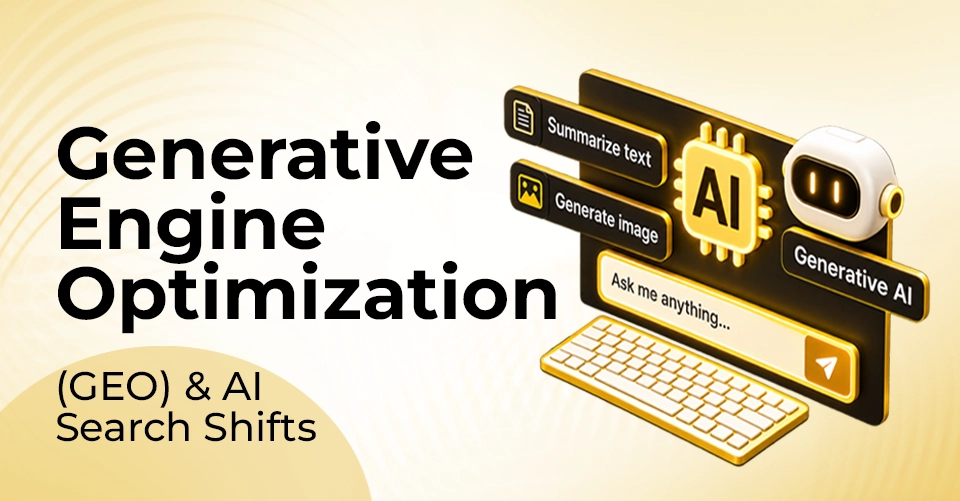
Will your website simply rank on search engines, or will AI choose to include your brand in the answer? Welcome to the world of Generative Engine Optimization (GEO), which has been becoming an important part of digital visibility in 2026. It focuses on helping AI-powered search experiences understand your content, recognise your expertise and show your website or brand when users look for them.
In this blog, we will see what GEO means, how it works and how businesses can prepare for the new era of AI-powered search.
What Is Generative Engine Optimization (GEO)?
GEO is the practice of improving your brand's visibility in AI-powered search experiences. When a user ask, "What are the best digital marketing services for a small business in Kerala?" Instead of showing only a list of search results, an AI search may analyse information from multiple sources and generate a direct answer. The answer may include explanations, recommendations, comparisons, brand mentions, supporting links and follow-up suggestions.
Google itself makes an important point that there is no separate secret formula required to appear in generative search. Its generative AI features continue to rely on existing Search ranking and quality, which means foundational SEO remains important. GEO and SEO are closely connected, but they focus on different outcomes. SEO focuses on improving visibility within search engines while GEO focuses more broadly on how generative AI systems understand information.
Common GEO goals include:
- Being referenced in AI-generated answers
- Improving brand visibility in conversational search
- Creating information AI systems can understand clearly
But the two should not be treated as completely separate strategies.
GEO Is Changing the Way We Think About Content
For years, many websites created content mainly around keywords, and that approach was already becoming outdated. AI search makes the limitations even more obvious. Generative search systems need to understand more than keyword repetition. They need context, relationships between ideas and reliable information. This is why topic depth is becoming more valuable than keyword stuffing.
1. Go Beyond Generic Content
One of the biggest challenges in modern content marketing is repetition. Search for almost any marketing topic and you will find hundreds of articles saying exactly the same thing. AI-generated search experiences make generic content even less valuable. If your article says what every other website already says, there is very little reason for being chosen. For example, instead of writing another article called "10 Benefits of Social Media Marketing", you may create something more useful like "How Kerala Businesses Can Turn Social Media Content into Leads through Social Media Marketing." The second topic provides context, audience relevance and a clearer perspective.
2. Build Topical Authority
Publishing twenty unrelated blog posts does not automatically make a website authoritative. The articles should be connected. A modern content strategy should build topic clusters. For a digital marketing company, a cluster around SEO could include "Complete Guide to SEO" as the main topic and the supporting topics can include On-page SEO, Technical SEO, Local SEO, SEO content strategy, SEO trends in 2026 etc. This structure helps both users and search systems understand your expertise.
3. Think Beyond Text
Search is becoming increasingly multimodal. People can search using text, voice, images, screenshots and conversational follow-up questions. Google's AI search experiences continue to support different ways of exploring information, including image-based and voice-based interactions. Your content strategy could include useful assets such as visual explanations, case studies, podcasts and FAQs.
Building a GEO Strategy in 2026
A practical GEO strategy can begin with five steps.
Step 1: Understand Your Audience's Real Questions
Move beyond simple keywords by thinking in conversations and not just search terms.
Step 2: Create Topic Clusters
Build deeper coverage around your important services and expertise, creating connected content around subjects that matter to your audience.
Step 3: Strengthen Technical SEO
A strong technical foundation supports both traditional and generative search visibility.
Step 4: Build a Recognisable Brand Entity
Maintain consistency across your platforms by ensuring that your brand continues to tell the same clear story everywhere.
Step 5: Measure AI Search Visibility
Businesses should monitor using the Generative AI performance report in Google Search Console, which was introduced in 2026 to understand how their websites perform across Google's generative AI search features.
GEO will continue to evolve because AI search itself is still evolving. We can expect greater importance around conversational search, follow-up queries, AI agents, personalised experiences and real-time information. Google's 2026 guidance also highlights the growing importance of preparing for emerging agentic experiences and keeping an eye on how AI agents may interact with websites.
For businesses preparing for the next generation of search, GEO should not be seen as another marketing buzzword to chase. It should be part of a smarter, more connected digital strategy. A professional digital marketing company in Kerala like Made in Space can help your business build that foundation through strong SEO, expert content, technical optimisation and a search strategy designed for both today's search results and tomorrow's AI-powered discovery.