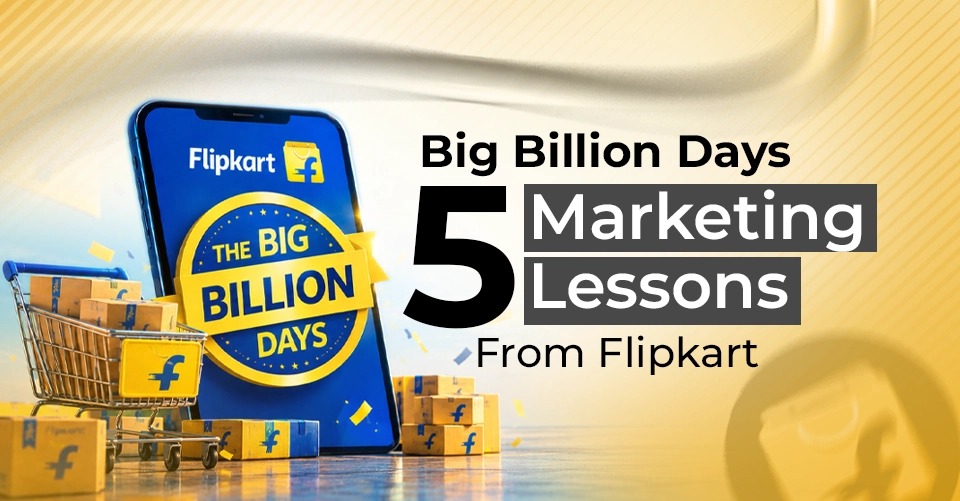
How Flipkart Big Billion Days Changed Festive Shopping in India: 5 Marketing Lessons for Every Business
On 9 October 2026, millions of Indians reached for their phones, opening Flipkart and checking out the deals they have been waiting for.
Flipkart Big Billion Days featuring discounts across categories such as smartphones, electronics, home appliances, fashion, furniture and lifestyle products was back, and India's festive shopping season got a whole lot more exciting. Special bank offers, exchange deals, no-cost EMI options and early access for eligible members added to the appeal.
For brands, it is an opportunity to reach high-intent shoppers. For sellers, it offers the potential to increase sales volumes. For Flipkart, it is a chance to attract traffic, strengthen customer habits and compete for a larger share of India's festive e-commerce market.
How did a sale that once left customers frustrated become one of India's biggest online shopping events?
The Beginning: A Sale That Almost Lost Customer Trust
The first Big Billion Day in October 2014 was far from the success Flipkart had imagined. The website struggled under heavy traffic, products sold out within minutes, abrupt order cancellations and customers raised concerns about pricing. The backlash was so huge that Flipkart's founders publicly apologised the following day.
Fast-forward to 2026, Big Billion Days has become a major event in India's festive shopping calendar, with brands, sellers and competing platforms preparing to capture shoppers' attention.
The lesson for every business was generating attention is only half the job. The customer experience must justify it.
A digital campaign can generate thousands of clicks, enquiries or purchases. But if customers encounter poor service, confusing pricing or a frustrating website, those short-term gains can come at the expense of long-term trust.
What Makes Big Billion Days Different?
The event was not a commercial failure in every sense. Reports at the time showed that Flipkart generated more than $100 million in sales within approximately ten hours. Despite the website crashes and customer complaints, the sale had captured people's attention on an extraordinary scale.
But what made Big Billion Days different from an ordinary online discount?
The answer lies in how Flipkart positioned it. Instead of treating discounts as isolated promotions, Flipkart brought them together under a recognisable annual event associated with festive shopping, special offers and purchases customers had been planning for months.
This created anticipation. A customer looking for a new television might wait for the sale, while someone planning to upgrade a smartphone might start comparing models before the sale starts. In other words, Big Billion Days influenced not just what people bought, but also when they bought it.
Businesses can apply the same idea through festive campaigns, annual sales, limited period launches and customer appreciation events. The key is consistency giving customers a recognisable reason to return.
The Psychology Behind Big Billion Days
Why do shoppers get excited about a sale even when they could purchase similar products at other times?
Several consumer behaviour principles help explain this response.
- The fear of missing out: When an offer is available for a limited period, customers may worry that waiting will mean losing the opportunity. Countdowns, sale announcements and limited-time promotions can make a purchase feel more urgent.
- The perception of value: Consumers do not look at a purchase only by its final price. They also consider how much they believe they are saving. A product presented alongside a credible reference price, an eligible bank discount and an exchange offer may appear more attractive than the same product displayed without those benefits.
- The excitement of anticipation: The period before the sale can be as important as the sale itself. Announcements, product previews and early-access benefits give shoppers reasons to check back, compare options and prepare their purchases. This changes a simple transaction into an experience that customers can anticipate.
Five Marketing Lessons Businesses Can Learn From Flipkart
The most useful part of this case study is how its lessons apply beyond e-commerce.
1. Build anticipation before launch
Do not wait until the day of a campaign to start communicating. Teasers, early announcements and useful content can prepare your audience and create interest before the launch.
2. Understand what motivates your audience
Price is only one factor in a purchase decision. Convenience, trust, quality, timing and value also influence customer behaviour. So, build campaigns around real customer needs.
3. Connect your marketing channels
Social media, search advertising, content marketing, email and your website should support a common objective. Disconnected campaigns can create inconsistent messages and missed opportunities.
4. Prepare your business for the attention
More traffic is useful only when your business can handle it. Review your website, enquiry process, stock availability, customer support and fulfilment before launching a major campaign.
5. Measure business results
Track conversions, customer acquisition costs, revenue, profit and repeat purchases. This will reveal whether a campaign is actually helping your business grow.
These principles apply to businesses of every size. A local retailer running a festive offer may not have Flipkart's advertising budget, but it can still create anticipation, communicate value clearly and deliver a better customer experience.
But Flipkart Is a Big Brand. Will This Work for My Business?
You might be thinking, "This works for Flipkart because millions of people already know the brand. But what about businesses like mine?"
It is a fair question, but they did not become a household name overnight. The brand people recognise today was built over years of business decisions, customer experiences and continuous growth.
You do not need millions of customers to create anticipation. A local store can build excitement around a festive collection. A growing business can introduce a limited-period offer. Here, what matters is knowing your audience, communicating your value and delivering on your promise.
This is where consistent, well-planned marketing makes a difference. For businesses looking to build that consistency, working with a digital marketing company in Trivandrum like Made in Space can help bring strategy, creative contents for campaign and campaign execution together around your business goals.
Every big brand started somewhere. The question is, what are you doing today to help your business grow into the brand you want it to become?