OTT Advertising in India: How Streaming Platforms Are Changing Advertising and How to Integrate OTT Ads With Other Digital Marketing Channels
OTT advertising has become an interesting option for businesses exploring new ways to connect with customers. But is it worth the investment? Which strategies actually work? And is it practical for smaller businesses, or is it still a game reserved for big brands?
Let's separate the real opportunities from the hype and explore how businesses can plan OTT advertising campaigns effectively.
The Rise of OTT Advertising in India
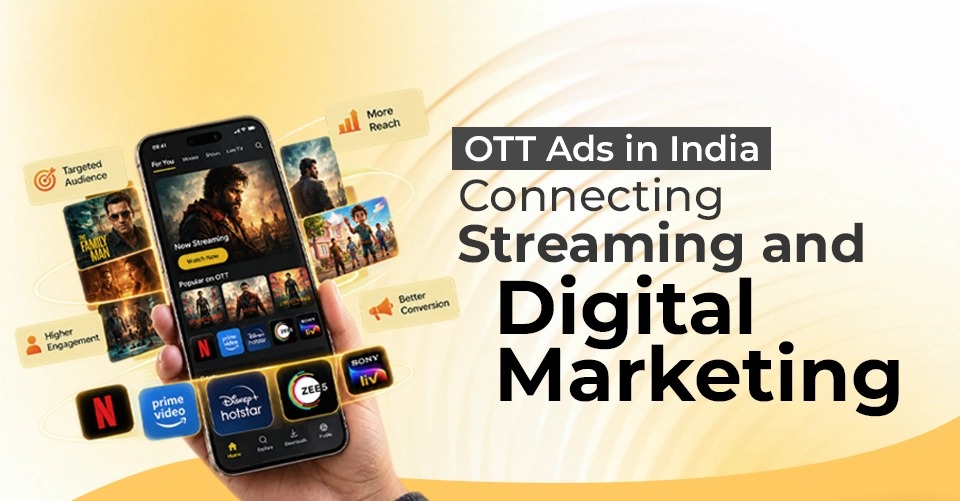
OTT Platforms such as JioHotstar, Netflix, Amazon Prime Video and ZEE5 have changed how audiences watch entertainment, from films and web series to live sports and regional-language programmes.
Affordable internet access, smartphone adoption, connected TVs, and the growing availability of content in Indian languages have contributed to this shift. Viewers are no longer dependent on fixed television schedules. They can choose what to watch, when to watch it and which device to use.
For advertisers, this creates new ways to reach audiences in a video-first environment.
OTT is not one uniform advertising channel. Ad-supported streaming services, free streaming content, live sports inventory, and premium subscription platforms can have different advertising models and targeting capabilities. Businesses must understand these differences before choosing where to invest.
What Actually Works in OTT Advertising?
Knowing the advantages is one thing. Turning them into a campaign that delivers meaningful results is another. Here are five approaches worth prioritising.
1. Start With the Audience and Not With OTT Platforms
It is tempting to choose a popular streaming service first and build the campaign around it. A better approach is to understand the people you want to reach.
For a business in Kerala, for example, a Malayalam-language campaign focused on selected districts may be more suitable than a nationwide campaign. A national brand, meanwhile, may need a broader regional and language mix. Your target audience should determine the platform, placement, and creative direction, not the other way around.
2. Match the Advertisement to the Viewing Context
Contextual relevance can make your message feel more natural. Consider these examples:
- A travel brand promoting holiday packages around travel and lifestyle content.
- A food brand advertising during entertainment programming.
- An automobile company showcasing a new model alongside premium entertainment.
But you need not have to force every advertisement to match a programme perfectly.
3. Make the First Few Seconds Count
Streaming viewers may be waiting for their programme to begin or for the next scene to continue. Your advertisement needs to communicate quickly.
A strong OTT video ad should have:
- A clear opening visual or idea.
- One primary message.
- Strong visuals and clean audio.
- Branding that is easy to recognise.
- A suitable call to action.
A 20-second advertisement should not feel like a 60-second television ad squeezed into a shorter slot.
4. Control Frequency and Plan Creative Variations
Repeated exposure can help people remember a brand, but showing the same advertisement repeatedly can be boring.
Creative variation can help this. Instead of repeating the same video throughout the campaign, introduce a brand story first, highlight a product benefit later, and follow with a specific offer when appropriate. This will keep the message fresh while giving audiences different reasons to remember your brand.
5. Measure What Happens Beyond the Video
Depending on the objective, measure:
- Awareness: Reach, impressions and views.
- Consideration: Website visits, search, and engagement with product pages.
- Performance: Qualified leads, conversions, sales, and return on advertising spend.
If awareness is strong but consideration remains weak, investigate whether the creative is strong. Likewise, prepare each optimization based on evidence.
Can OTT Advertising Work With Other Digital Marketing Channels?
OTT advertising does not have to work as a standalone campaign.
Think about the customer journey. Someone might discover your brand through a streaming advertisement, search for the business on Google a few days later, visit its website, and eventually enquire on it through social media.
A coordinated digital marketing strategy helps these work together.
- OTT advertising introduces the brand through video.
- Search engine optimization (SEO) helps potential customers find more relevant information through search.
- Google Ads can capture people actively searching for products or services.
- Social media marketing builds familiarity and keeps the brand visible.
- Remarketing can reconnect with eligible audiences who have previously interacted with the business.
This is where a digital marketing company can add value beyond simply launching advertisements, and move towards planning the customer journey, connect channels where appropriate, and measure how each contributes to the wider business goal.
For businesses exploring OTT advertising in Kerala, this integrated approach can help connect video-led awareness with the search, website and enquiry experiences that follow.
But the real opportunity is not simply getting an advertisement onto a streaming platform. It is knowing who should see it, what they should remember and what role they should play in the customer journey.
As a leading digital marketing company in Trivandrum, our team at Made in Space believe every marketing channel should have a clear purpose. Whether you are exploring OTT advertising, building a video campaign, or connecting paid media with SEO and social media marketing, the starting point is the same, understand your audience, define your objective, and build a strategy around what your business needs to achieve.
Looking to explore new advertising opportunities for your business? Start by identifying where your audience spends its time and how your brand can make that time count.