How Micro-Interactions and Motion Designs Make Websites More Engaging and Improves User Experience
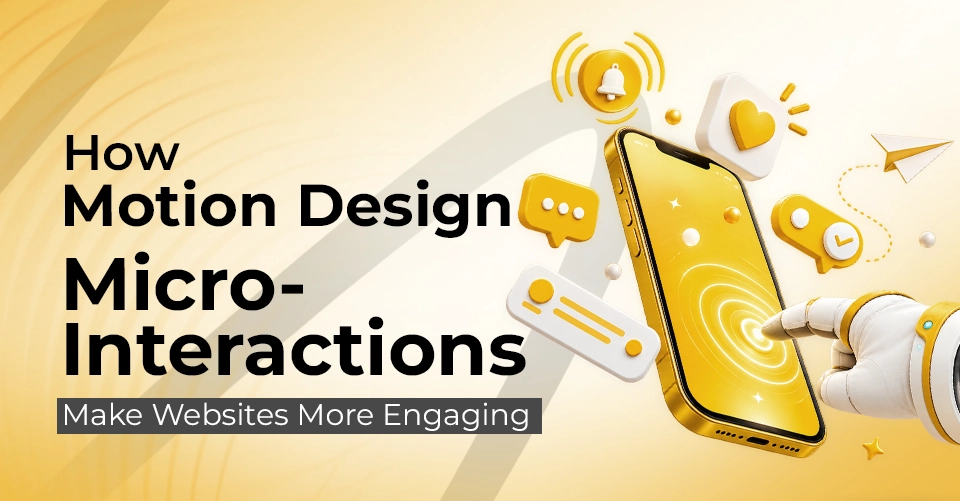
Have you noticed how a button changes colour when you click it, or how a confirmation message appears after you submit a form? Think about the last time you experienced one of these small details while browsing a website. These are everyday examples of micro-interactions. Instead of leaving users wondering whether their actions worked, the interface gives them an immediate response.
While micro-interactions typically focus on individual actions, motion design can influence the experience across an entire website. For example, a product image might gently move into view as a visitor scrolls. A navigation menu might expand smoothly when selected.
People interact with websites through a continuous series of actions like clicking, scrolling, typing, selecting and navigating. When these actions receive clear and consistent feedback, visitors can understand the interface with less effort. For businesses, this creates an opportunity to improve the entire customer journey.
5 Ways Micro-Interactions and Motion Design Improve User Experience
1. They Make Websites Feel More Responsive
Nobody likes clicking a button and wondering whether anything happened. Without clear feedback, visitors may click repeatedly, refresh a page or abandon the action. But a simple visual response can prevent this confusion.
This is particularly useful on websites with booking systems, payment processes, lead-generation forms and other interactive features.
2. They Guide Visitors Towards Important Actions
A website might have an excellent service offering, but if visitors cannot identify the next step, the opportunity to convert them can be lost. Motion design can help direct attention towards important elements without overwhelming the page.
A subtle hover effect on the enquiry button in a website can make the button feel interactive. The movement should support the visual hierarchy and not compete with it. If every element moves, flashes or bounces, nothing will feel important.
3. They Make Navigation Feel More Natural
A dropdown menu that opens smoothly makes the change in state easier to follow. A mobile navigation panel that slides into view helps to communicate where the menu has appeared. A subtle transition between tabs makes it clear that the displayed content has changed. These effects create continuity between actions and responses.
An e-commerce website with several product categories can use restrained transitions to help visitors move between filters, product listings and product details, so that finding information feel effortless.
4. They Add Personality to Your Brand
Your website influences how people perceive your business. The typography, colours, layout and interaction patterns work together to create a particular impression. Motion design adds another layer to that identity.
A premium hospitality brand might prefer gentle transitions that create a calm, refined atmosphere while a creative agency could use expressive movement to reflect its visual personality. Also, the brand personality should never come at the expense of usability. An animation that delays access to important information or makes visitors wait through an unnecessary introduction can create frustration instead of a positive impression.
5. They Can Improve Engagement and Support Conversions
As thoughtful animation can make important information easier to discover, clarify interactive elements and encourage visitors to continue exploring, it will help the viewer interact meaningfully with the content.
It is also important to distinguish between visual appeal and measurable results. Adding animations will not automatically increase sales or enquiries. The impact depends on the audience, the design, the website's performance and the task users are trying to complete. Businesses should test changes against form completion rates, checkout abandonment, successful task completion and qualified enquiries.
Where Businesses Can Use Micro-Interactions on Their Websites
Micro-interactions and motion design can improve several parts of a website when applied according to their purpose.
- Homepage and landing pages: Use subtle entrance animations, responsive call-to-action buttons, highlight enquiry buttons and smooth transitions to introduce key messages.
- E-commerce websites: Provide immediate feedback for adding products to carts, selecting sizes, applying filters and updating quantities.
- Web applications and dashboards: Use loading states, status changes and progress indicators to help users understand complex processes and ongoing tasks.
Recent Motion Design Trends Shaping Website Designs
As website design evolves, the focus is shifting towards more purposeful and user-aware animation. Several approaches are important to businesses planning a website redesign or a new digital experience.
Minimalist and Purposeful Animation
More movement does not mean a better experience. Restrained animations can make a website feel polished without distracting visitors from its content. Small hover effects, subtle fades and short transitions are enough to communicate a change or direct attention.
Scroll-Based Storytelling
Some websites use scroll-triggered animation to reveal information progressively as visitors move down a page. This can work well for product launches, brand stories and complex services that need a structured explanation.
More Natural Motion
Animation timing influences whether a transition feels abrupt, mechanical or smooth. Well-chosen easing curves help movement start and stop naturally. The right duration depends on the task because a quick button response should generally feel immediate, while a larger panel transition may need slightly more time to remain understandable.
Accessibility-First Animation
Some users experience discomfort from excessive movement or zooming effects. So, a reduced-motion feature may be opted as websites should also be readable. Essential information must remain available even when non-essential animations are reduced or disabled.
Performance-Conscious Motion
Website speed remains important, especially on mobile devices and slower connections. Animations that trigger excessive layout changes or rely on large media files can affect responsiveness. A visually impressive website is only effective when visitors can use it comfortably.
In general, micro-interactions provide small responses that reassure users and help them understand what is happening. Motion design connects those moments, guides attention and gives the interface a natural sense of flow.
As part of a broader website design and development strategy, these details can help businesses create digital experiences that reflect their brand and support their goals.
Planning a new website or looking to improve your existing one? Focus on the details that make every interaction count. A better user experience could begin with one small change. That one small change could start with choosing Made in Space, the right website development company in Trivandrum.