Launched Your Website but Still Missing on Google? Understand the Reasons and Learn How to Get Your Pages Found
Getting a website ready takes more than choosing a design and publishing a few pages. There is content to prepare, services to explain, images to select and plenty of small details to get right. After all that effort, seeing your website go live feels like a major achievement.
Naturally, the next expectation is that people will start finding it through Google. But when you search for your business or the services you offer, your website is nowhere in sight.
What happened? Did Google miss your website, or is something preventing it from appearing in search results? The answer lies in how search engines discover, understand and rank websites.
First, Does Google Actually Know Your Website Exists?
Think of Google as a massive library that keeps receiving new books. Before a book can be found through the library catalogue, someone needs to identify it, examine its contents and add the relevant information to the catalogue.
Websites go through a similar process.
Google uses automated programmes called crawlers to discover webpages across the internet. These crawlers follow links, visit publicly accessible pages and collect information that Google can process.
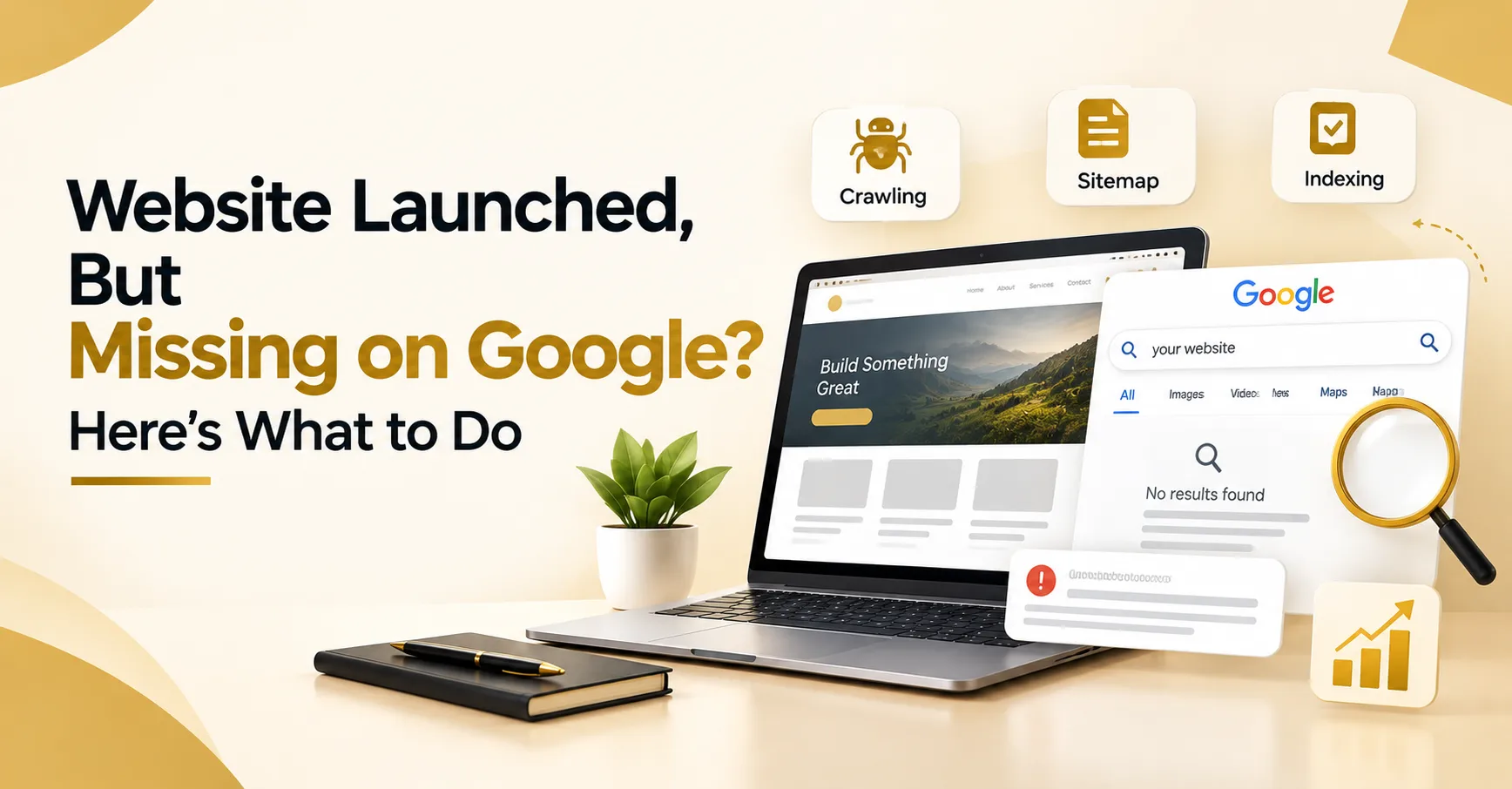
This process involves three important stages:
- Crawling: Google discovers a webpage and attempts to access its content.
- Indexing: Google analyses the page, understands its content and may add it to its search index.
- Serving search results: When someone searches for something, Google selects relevant pages from its index to display.
What you can do is create a clear website structure. Link your homepage to important service pages, connect related blogs and make sure every valuable page can be reached through ordinary, crawlable links. This can also help Google discover important URLs.
6 Things to Do After Your Website Goes Live
Getting your website indexed should not be the last item on your launch checklist. A website needs regular attention if you want it to perform well in organic search. Here are six things worth including in your post-launch SEO routine.
1. Submit Your XML Sitemap
An XML sitemap is the list of important URLs you want search engines to discover. It helps Google understand the structure of your website and find new or updated pages. You can submit it through Google Search Console and check whether Google can access it successfully.
2. Optimise Your Page Titles and Meta Descriptions
Every important page should have a clear, descriptive title that tells visitors and search engines what it covers. For example, a page titled "Our Services" does not communicate as much as "Digital Marketing Services in Trivandrum". Your meta description should also provide a useful summary of the page and give searchers a reason to click.
3. Make Your Website Mobile-Friendly
Most people are not sitting at a desk every time they search for a business. They might be looking for a restaurant while travelling, checking a clinic's services during a break or comparing products while shopping. Your website should offer a smooth experience across different screen sizes. Check whether the text is readable, buttons are easy to use, images display correctly and visitors can navigate between pages without difficulty.
4. Build Relevant Internal Links
If you publish a blog about SEO, link it to your relevant SEO service page. If you have a page about website development, connect it to related articles that explain website features, performance and maintenance. These links help visitors discover useful information while giving search engines more ways to find and understand your pages.
5. Create Quality Contents
Publishing content just to make your website look active is not the best strategy. Think about the questions your potential customers ask before choosing a business. Write blogs, service guides and FAQs that provide genuinely useful answers. A real estate company could discuss property-buying considerations while a digital marketing agency could explore social media and changing online trends.
6. Keep Your Website Updated and Maintained
A website launch is not the end of website management. You need to review outdated information, fix broken links, update service details, check forms and monitor technical performance. If your business introduces a new service or changes its contact information, make sure your website reflects it.
How Long Does Google Take to Index a New Website?
This is probably one of the first questions business owners ask after launching a website. Unfortunately, there is no fixed number of days that applies to every website.
Google may discover and crawl some pages within a few days, while others can take longer. The timing depends on factors such as how easily Google can discover the URLs, whether the website is accessible and how Google's crawling systems prioritise the pages.
It is also important to remember that indexing does not guarantee rankings. Even after your website enters Google's index, improving its visibility for competitive search terms will need continuous SEO work.
Your Website Needs More Than a Launch Date
A website launch is an exciting milestone, but it is not a guarantee of online visibility. Your website can be compared to a business location. Launching it is like opening the doors, indexing makes it discoverable through Google's catalogue, and SEO helps the right people find their way to it. Each stage has a role to play, and overlooking one can affect the results of the others.
As the best digital marketing company in kerala, Made in Space sees a website as more than just an online address for your business. Through our website development services, we aim to help your potential customers discover your services, understand what you offer and take the next step with confidence. So, we work with website optimisation, SEO and content strategies that support business growth.
Is your website live but still missing from Google? It might be time to look beyond the launch and understand what is happening behind the scenes. Explore our SEO services and website development services and give your website a better chance of being found by the people searching for what you offer.